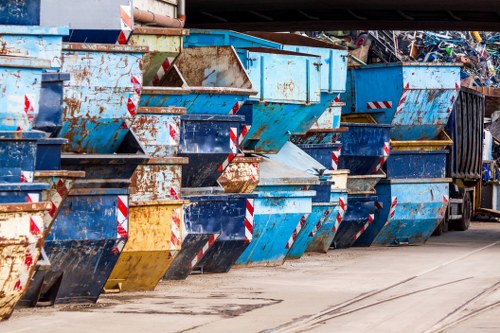
 Commercial Waste West Ham: Recycling and Sustainability for Businesses
At Commercial Waste West Ham we build practical, local solutions to support an eco-friendly waste disposal area and a resilient sustainable rubbish area across East London. Our approach to commercial waste in West Ham focuses on maximising reuse, reducing landfill and helping businesses align with borough recycling standards. By combining targeted collections, community partnerships and low-emission logistics, we help local firms meet environmental obligations while improving resource efficiency.
 Recycling Percentage Target and Performance Ambition
We have set a clear recycling percentage target: a minimum of 65% commercial recycling by 2030 across our client base in and around West Ham, rising to 75% for agreed sector pilots by 2028. This target is ambitious yet achievable because it pairs improved segregation at source with smarter sorting and stronger reuse chains. The aim supports wider borough targets and contributes to Newham's and neighbouring boroughs' strategies for reducing residual waste and improving capture rates for organics and textiles.
To reach these milestones we coordinate with local transfer stations and materials recovery facilities so that commercial recycling West Ham streams are processed efficiently. Collections are consolidated to reduce double-handling; recyclable loads are routed to appropriate reprocessors and specialist facilities for glass, paper, card, metal, and food waste—reflecting common borough approaches to waste separation.
 Partnerships with local transfer stations form the backbone of the system, ensuring that what is collected in West Ham enters the right recycling stream quickly and with minimal contamination.
We work with several nearby transfer and processing locations including local East London transfer stations and regional Materials Recovery Facilities (MRFs) to keep haul distances short and processing times low. Typical pathways include consolidation at a nearby transfer station, sorting at a MRF, and onward delivery to specialist recyclers for glass, food and organics, or textiles. This close geography underpins the low-carbon logistics strategy and helps maintain material quality.
Our charity partnerships turn commercial surplus into social value. We collaborate with local and national charities and social enterprises — examples include Emmaus East London, community reuse hubs and textile charities — to divert usable items from disposal. These partnerships provide reuse routes for furniture, office equipment and textiles, helping local people and generating measurable reductions in embodied carbon.
Our reuse and charity alliances are delivered hand-in-hand with borough-led separation schemes: many Newham businesses already separate food caddies, dry mixed recyclables and cardboard, and we tailor commercial collections to match these streams so that waste is collected in a format that borough reprocessors expect.
Low-Carbon Vans, Fleet and Sustainable Logistics
Reducing transport emissions is central to creating a genuine sustainable rubbish area. Our fleet comprises a growing mix of electric vans, plug-in hybrids and the latest low-emission Euro 6 vehicles. Route optimisation and load consolidation cut miles and idle time, while scheduled swap-outs and telematics ensure vans operate in their most efficient modes. We plan a full transition to a low-carbon van fleet for last-mile collections by 2030.
Beyond vehicles, we deploy practical measures to lower carbon per tonne collected: optimised schedules, shared collection hubs for small businesses, and increased use of transfer stations to avoid inefficient city centre movements. These operational changes support the recycling percentage target and reduce the carbon footprint of commercial waste in West Ham.
We regularly audit material flows and publish progress summaries to clients and partners. Robust data allows us to identify high-impact interventions—such as improved cardboard capture or onsite food waste segregation—that accelerate progress toward the 65% target.
Training for drivers, site teams and client staff is a core element of success. Clear labeling, provision of appropriate containers and staff briefings align onsite behaviour with borough requirements and our own best practices. While we do not publish step-by-step guides here, we ensure every client receives practical support to improve separation and reduce contamination in their commercial recycling West Ham streams.
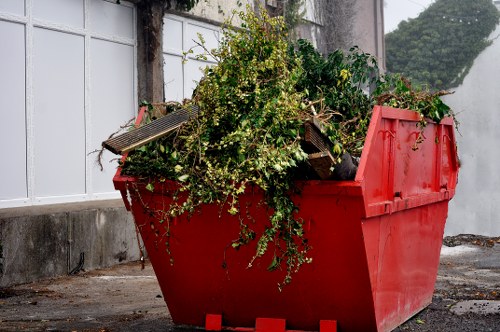 Community engagement and local repair hubs extend the life of products and materials before they enter the waste stream. These initiatives support a circular economy in Newham and neighbouring boroughs by promoting repair, refurbishment and resale instead of early disposal. Commercial donations to reuse centres also create direct social benefits and help local charities fund services.
 In conclusion, our strategy for Commercial Waste West Ham brings together clear recycling goals, local transfer station partnerships, charity reuse networks and a low-carbon van fleet to deliver a genuine eco-friendly waste disposal area. By aligning business collections with borough separation practices, prioritising reuse and investing in decarbonised logistics, we create measurable environmental and social outcomes and move steadily toward a resilient, sustainable rubbish area in East London.
