Commercial Waste West Ham
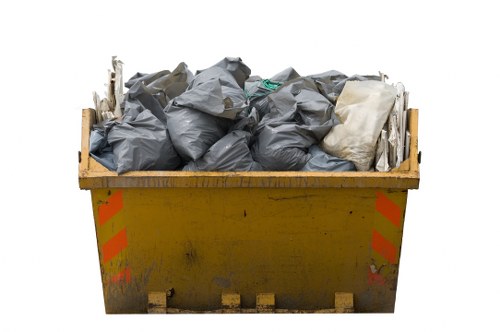
Commercial waste collection in West Ham should be straightforward, compliant and sized around the reality of your premises. We handle business rubbish from day-to-day operations, moving it away in planned collections that suit offices, shops, workshops and other commercial sites. The focus is on keeping your premises clear, helping your team stay organised and making waste removal feel like part of normal operations rather than an interruption.
Our service covers recurring commercial waste removal as well as one-off clearances for larger volumes of mixed business rubbish. That can include office bagged waste, cardboard, packaging, light fixtures, obsolete stock, non-hazardous bulky items and other general commercial refuse that has built up over time. Where the waste stream needs separating, we can work with it in a more structured way so recyclable material is kept distinct from the rest. The aim is practical removal rather than an overcomplicated process, while still keeping disposal expectations clear.
For a quotation, use the contact details on the site and tell us what you need removed, how often it arises and whether access is straightforward. If you already know the type of waste, that helps us shape a suitable response. Clear information leads to a more useful quote. You can also compare the service pages below to see which collection type fits your business best before you ask us to price it.
Regular business waste collections
Ongoing business waste removal is usually the simplest way to keep a commercial site under control. Scheduled collections are well suited to premises that produce a steady flow of packaging, paper, mixed office waste and general rubbish during the working week. Rather than waiting until bins overflow, a planned collection pattern helps you keep storage areas manageable and waste from interfering with customer-facing or staff-only spaces. It also supports more consistent segregation, which matters where different waste types are produced in separate parts of the building.
We can manage recurring waste from many ordinary commercial settings, including shared offices, retail units, back-of-house storage rooms and small workplaces that do not need a full-time in-house waste setup. The service is flexible enough for different container sizes and collection frequencies, so it can be tailored to a modest amount of waste or a busier operation with more movement every day. Business waste removal is often the best place to start when you want an arrangement built around routine uplift rather than a single clearance.
When planning ongoing collections, it helps to think about the type of waste produced, the volume at peak times and any access limitations around loading areas, lifts or rear entrances. Those details influence how a collection is organised and whether mixed waste, recyclables or bulky items need separate handling. If you are reviewing options, a brief conversation about the waste stream can save time later and make the eventual quotation much more accurate.
One-off clearances and bulk items
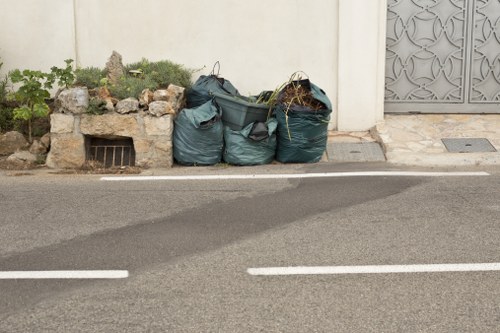
Some businesses only need waste removed after a refit, stock change, office reorganisation or storage purge. In those situations, a one-off clearance can be more efficient than trying to fit everything into a routine bin arrangement. We remove commercial rubbish that has accumulated in back rooms, corridors, stock cages or plant areas, and we can deal with mixed items where ordinary waste containers would be too small or impractical. The work is arranged to clear space and take away the load in one visit where possible.
This kind of clearance is useful when the waste includes packaging, shelving components, redundant office items, trade leftovers or lightweight bulky materials that are no longer needed on site. A one-off collection is also helpful if there is a deadline for handing back a unit, opening a refitted area or preparing for maintenance work. Waste removal gives a broader overview of the service where the load is not tied to a repeating collection pattern.
To keep the booking process smooth, it is useful to have a rough idea of how much needs removing and whether the waste is spread across one room or several. You do not need to turn it into an inventory, but a simple description of the main items helps us judge the scale. If access is awkward or goods are stored above ground level, mention that too so the quote reflects the practicalities of the job.
Office waste and workplace clearances
Office waste removal in West Ham is often about more than paper bags and broken stationery. Workplaces generate a mix of general rubbish, cardboard, redundant furniture and items removed during changes to layout or occupancy. A tidy office environment depends on taking away waste without disrupting desks, meeting rooms or shared circulation areas. We can therefore handle clearance work in a way that suits operational spaces, from a small suite of rooms to a larger multi-use workplace.
For offices, the main decisions are usually about whether waste should be removed as part of a regular service or as a single clearance after a move, fit-out or declutter. Office clearance is useful when the job includes furniture, equipment housings or stored materials that are not part of everyday bin waste. If you only need routine collection, the broader business waste option may be enough on its own. Choosing the right route keeps the service focused and avoids paying for more work than you need.
Good planning matters here. Tell us whether items are boxed, stacked, dismantled or still in place, because that affects lifting, loading and the time needed on site. A brief note about entrances, stairs, lifts and any building rules is also helpful. Where office waste includes materials that need separating, we can consider those details when putting together a quotation.
Packaging, cardboard and mixed recyclable waste
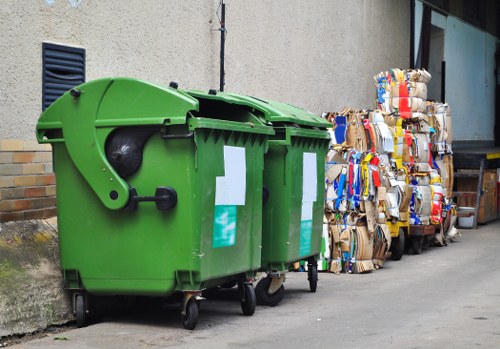
Commercial premises often produce a large amount of cardboard, wrapping, plastic film and mixed light waste from deliveries and stock handling. These materials take up space quickly and are usually easiest to manage when they are collected before they spread through storage areas or back-of-house corridors. We can deal with these common business waste streams as part of a planned collection or a larger clearance, depending on how the material is generated on your site.
Where recyclable material forms a significant part of the load, it is worth separating what can be kept apart from general rubbish. That supports a cleaner and more orderly collection process and may simplify handling at the disposal stage. Recycling and sustainability explains the broader approach to diverting suitable materials where possible, while still leaving room for the practical realities of mixed commercial waste.
Packaging waste is rarely uniform, so the best route depends on quantity rather than a generic rule. A retail stockroom with repeated deliveries may need a different arrangement from a workshop receiving occasional pallets and wraps. If you send over a description of the main materials, we can suggest whether they fit best within regular collections or a one-off uplift.
Bulky office furniture and fixtures
Commercial premises sometimes need more than bags and bins removed. Desks, chairs, filing cabinets, shelving, partitions and other workplace fixtures can all become surplus after refurbishments, relocations or layout changes. These items are often too bulky for ordinary waste handling, and they can slow a site down if they remain in corridors, meeting rooms or storage spaces. We can remove such items as part of a broader office or furniture clearance, depending on what is actually on site.
For items that are still intact but no longer wanted, a planned uplift is usually the cleanest approach. It reduces the need for repeated handling and allows the load to be moved away with the rest of the clearance. Furniture clearance is the most relevant page when the main concern is surplus commercial furniture rather than general rubbish. If the items are specifically being taken away to prevent clutter after a change of use, that route is often easier to describe when requesting a quote.
Where fixtures are partly dismantled or mixed with other waste, please mention that in your enquiry so the scope can be assessed properly. We do not need a full item-by-item breakdown, but the main categories are important. A little clarity helps avoid underestimating the work and makes it easier to plan lifting, loading and disposal in a sensible way.
Specialist items and controlled disposal
Not every commercial load is made up of ordinary office rubbish. Businesses may also need help with items that require more care, such as appliances, shredding material, or waste that needs a more controlled disposal route because of its composition. The important point is to match the waste to the right removal method rather than folding everything into one generic pickup. That is especially relevant when the site generates varied material streams across different departments.
Where the load includes secure paperwork, old office devices, broken white goods or other specific items, it is best to use the most appropriate service page rather than assuming every collection is identical. Confidential shredding applies where secure document disposal is the main issue, while fridge and appliance removal is relevant for equipment that cannot simply be left with standard waste. Choosing correctly makes the enquiry easier to answer and helps keep the service suitably defined.
Specialist items may also need extra care because of weight, access, or the way they are stored before collection. If appliances are still connected, if documents are boxed in secure areas, or if the waste is mixed with other commercial rubbish, say so early. That way, the quotation can reflect what is actually involved rather than relying on assumptions about a standard load.
About West Ham
West Ham is an area in east London within the London Borough of Newham, known historically as one of the old parishes of Essex before becoming part of the built-up growth of the capital. The area sits between several major transport corridors and long-established districts, with the River Lea and the wider docklands landscape helping to shape its industrial past. Much of the present-day character comes from layers of development rather than a single planned centre, so streets, estates, open spaces and older routes sit close together in a compact urban pattern. That mixture gives West Ham a varied feel, with Victorian and later housing alongside newer regeneration and infrastructure. The area is also closely associated with West Ham Park, a large public open space managed by the City of London, which remains one of the most recognisable green features in the locality. Nearby, Upton Park and the surrounding neighbourhoods have also contributed to the identity of the district over time, especially through housing growth, local commerce and changing transport links. The result is a place that combines residential streets, busy main roads and pockets of open land within a broader east London setting.
Handling access, timing and disposal details
Commercial waste collection works best when practical details are clear before the job starts. If your site has narrow entrances, loading restrictions, lift use, controlled entry or timed access slots, those factors can shape how the collection is arranged. The same applies when waste is stored on more than one floor or when items need to be moved through customer areas. A concise description of the location and the type of waste is usually enough to start a useful quotation.
You do not need to provide a long list unless the load is unusually mixed. A few sensible details are usually enough: what the main materials are, whether they are bagged or loose, whether bulky items are included and whether there is a preferred collection window. Pricing and quotes is useful if you want to understand how the service is normally put together before making contact. After that, you can decide whether you need a one-off clearance or a continuing arrangement.
For many businesses, the best approach is simply to keep the communication direct and practical. Describe the waste, identify any access issues and mention whether it is a repeat requirement or a single collection. That is usually enough to move from general enquiry to a realistic quotation. If you are ready to get started, send the details through and ask for a quote for your West Ham commercial waste removal.
Loading, sorting and site planning

Some collections are straightforward, but others benefit from a little site planning before removal day. If waste is spread across storage rooms, office floors or yard space, it may help to decide in advance what stays, what goes and what can be grouped together. Doing that makes the loading process more efficient and reduces the chance of usable space being left tied up by stray items or half-prepared piles. It also helps the team focus on the correct materials as soon as they arrive.
The same applies when commercial rubbish includes a mixture of light waste, heavier objects and materials that belong in separate handling streams. Keeping those categories clear makes disposal more orderly and avoids unnecessary sorting on site. Hazardous waste disposal is a separate topic and should only be used where the waste genuinely needs that level of specialist control. Ordinary commercial rubbish does not need to be treated as hazardous unless its nature makes that appropriate.
For any quotation, think about the practical side of removal as well as the type of waste. A simple note on the quantity, the floor level and whether the items are already gathered together is usually enough to help us respond sensibly. That keeps the focus on an accurate price for the work you actually need rather than on assumptions. If you are comparing options, use the service pages and then request a quotation when you are ready.