Health and Safety Policy — Commercial Waste West Ham
 Purpose: This Health and Safety policy sets out the approach of our commercial waste and rubbish removal operation to protect employees, contractors and third parties. The policy applies to all activities associated with commercial waste collection, transfer and disposal across the service area. Our aim is to minimise harm by identifying hazards, managing risks and promoting a safe working culture for anyone engaged in the commercial rubbish service.
Scope: The policy covers commercial waste collection, on-site bin handling, vehicle operations, manual handling, hazardous materials handling and routine depot activities. It also addresses seasonal variations and peak-density collection periods to ensure consistent standards across routes. All staff and subcontractors are required to follow the standards set out here as part of their duty to keep workplaces safe.
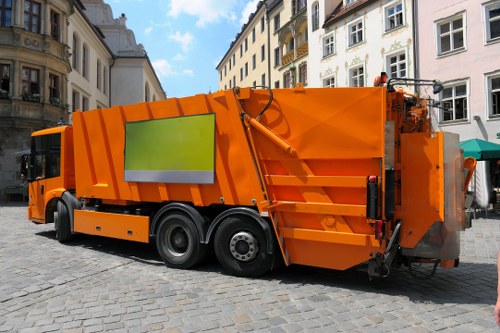 Responsibilities: Senior management retains ultimate responsibility for safety systems, risk assessment and resource allocation. Supervisors and team leaders must implement procedures and monitor compliance. Employees must take reasonable care for their own safety and cooperate with safety processes. Key roles include designated safety officers and trained first-aiders who support incident response and reporting.
Risk Management: Risks are controlled through a hierarchy of measures: elimination, substitution, engineering controls, administrative controls and personal protective equipment (PPE). Regular site and route risk assessments identify traffic hazards, manual handling risks, sharps and hazardous substances. Control measures are documented, communicated and reviewed after incidents or operational changes.
Training and Competence: Every operative receives induction training covering safe systems of work, driver safety, manual handling, waste segregation and PPE use. Ongoing competency checks, toolbox talks and refresher courses are provided to maintain high standards. Training records are maintained and audited to ensure compliance and continual improvement in the commercial waste service.
 Operational Controls: Standard operating procedures define safe lifting techniques, vehicle loading limits, bin positioning and traffic management at collection sites. Vehicles and lifting equipment are subject to pre-shift checks and scheduled maintenance. Chemical and hazardous waste are segregated and handled according to specific procedures, with spill kits and containment methods available at depots and on vehicles.
Personal Protective Equipment: Appropriate PPE (hi-vis clothing, gloves, safety boots, eye protection and respiratory protection when necessary) is provided and must be used. Supervisors will ensure PPE is suitable for the task and replaced when worn or damaged. Employees are required to report defective PPE so replacements can be issued before the next duty.
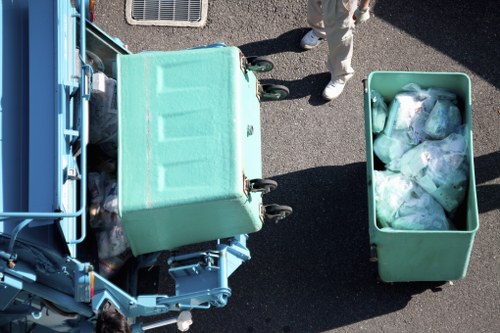 Incident Reporting and Investigation: All accidents, near misses and hazardous observations must be reported immediately through the company incident system. Investigations focus on root causes and corrective actions rather than blame. Lessons learned are communicated to teams and used to update safe working arrangements to reduce reoccurrence.
 Emergency Preparedness: Emergency plans cover vehicle collisions, fires, chemical spills and medical emergencies. Staff receive training in emergency procedures and marshals are appointed at larger sites. Depots maintain emergency equipment and contact lists for authorised responders. Evacuation routes and muster points are clearly marked and tested during drills.
Vehicle and Road Safety: Drivers must hold valid licences and comply with hours of service rules and company driving policies. Vehicles are subject to daily checks, secure load planning and safe access procedures. The transport policy emphasises defensive driving, appropriate speed for conditions and secure lashing of bulky commercial waste consignments to prevent shifting during transit.
Health and Wellbeing: The company promotes occupational health by managing fatigue, providing access to health surveillance where hazards warrant it, and encouraging reporting of work-related health concerns. Support services are available for stress, musculoskeletal complaints and other work-related health issues to maintain a resilient workforce.
Monitoring, Audit and Review: Safety performance is monitored through audits, inspections and performance indicators such as incident rates and compliance checks. Findings are used to refine procedures and training. This policy will be reviewed at least annually and updated when operational changes, legislative changes or new hazards arise to ensure it remains effective for a professional refuse and commercial waste collection service.
Key Safety Commitments
- Prevent harm by identifying and controlling workplace hazards.
- Provide training and resources to ensure safe task execution.
- Maintain equipment and vehicles to safe operational standards.
- Encourage reporting and continuous improvement.
Policy Implementation
This policy is supported by documented procedures, risk assessments, training plans and regular reviews. Managers are responsible for ensuring the policy is implemented; employees and contractors must comply with the requirements. Through cooperation and vigilance we commit to delivering a safe, lawful and efficient commercial rubbish service across the service area.
Review Statement
We are committed to continual improvement. The Health and Safety policy for commercial waste operations will be reviewed periodically and whenever significant changes occur to operations, materials handled or relevant safety standards. The outcome of reviews will drive updates to procedures, training and controls to sustain a safe working environment.
